
Why expect kids to use AI responsibly,why not build AI which behaves responsibly?
Most AI is built for adults. When children use it, we add filters, limits, and parental controls — but children are not “smaller adults.” They are still developing the reasoning, creativity, and perception of the world that AI can so easily weaken. dew is a child-facing AI that kids (under 18) can turn to — to learn, create, share, discuss, and find guidance — while protecting the very thinking that makes learning meaningful. Grounded in the Socratic method, it guides rather than hands over answers — free, safe by design, and open-source (coming soon).
A foundation model that is child aware.
A look at dew engaging with a child, guiding and coaching them through academic, social, and emotional queries.
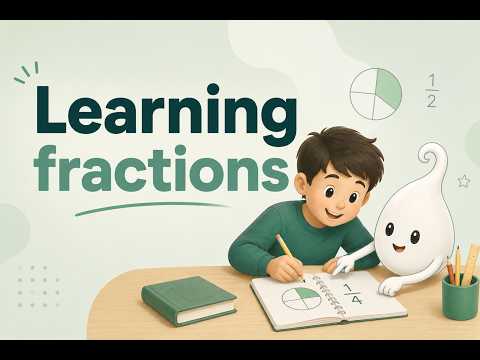
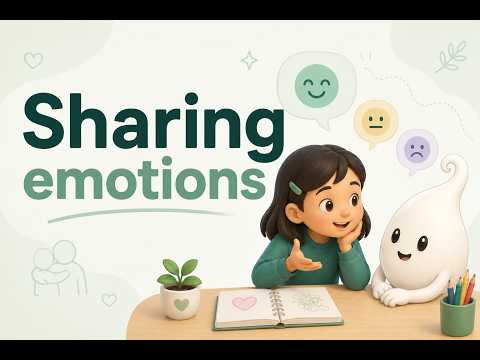
More than a coach. A partner in thinking. A companion.
Learn by thinking, not copying
Ask anything, any time. dew never rushes to answer. It helps a child build the habit of thinking, not just the habit of prompting.
Share & discuss, freely
A safe space to talk through ideas, curiosities, and worries — dew listens, responds at their level, and keeps the conversation non-judgemental.
Speaks a child's language
Fine-tuned on a curated corpus of age-appropriate material, so its vocabulary and pacing fit the child — not a corporate user — and adapt to grade level automatically.
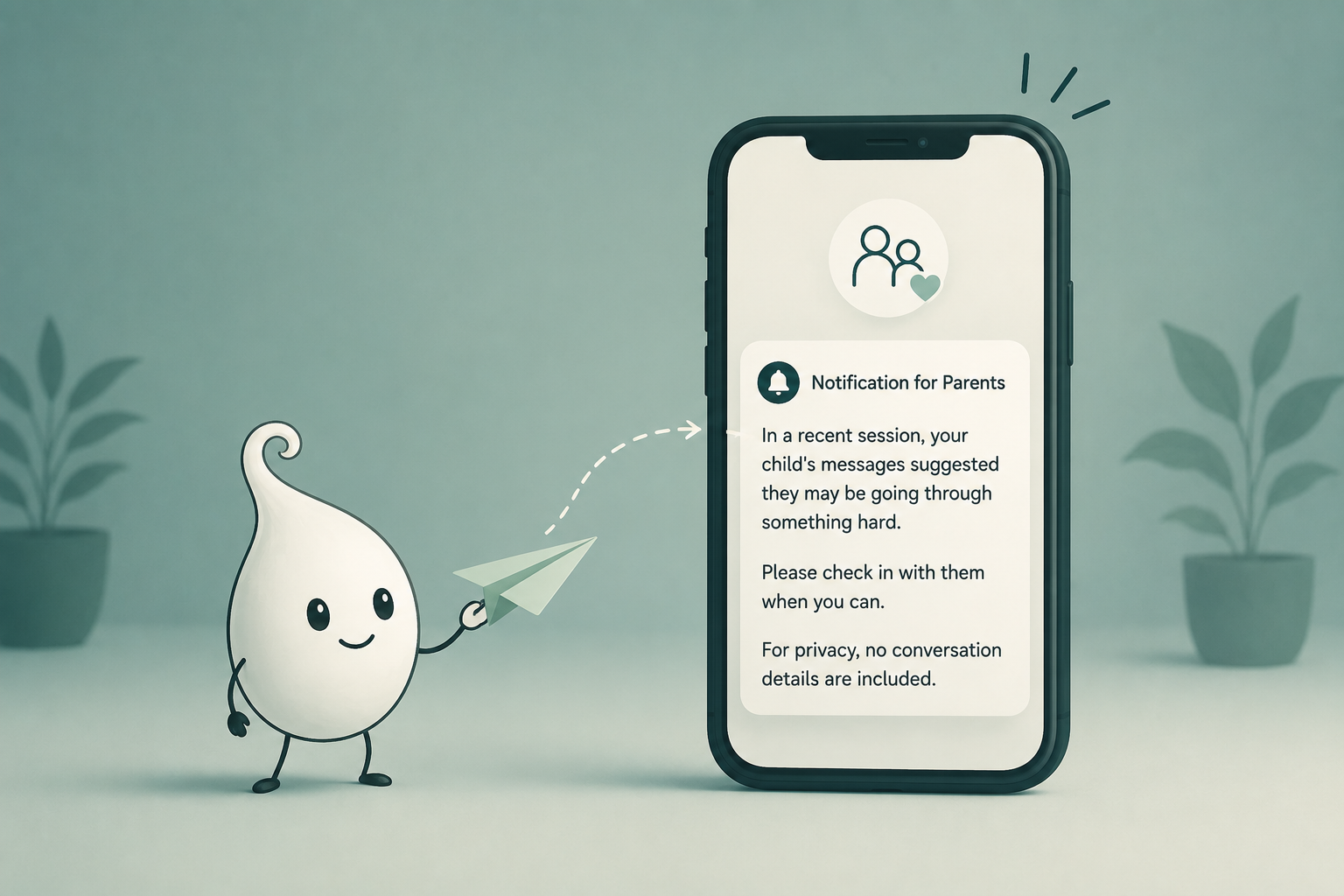
Safeguarding without surveillance.
Alerts for serious risk
If a child shows signs of suicidal thoughts or violent ideation, parents are alerted immediately.
Private by design
No ads, no data harvesting, no behavioural profiling. We collect only the minimum, and your family's data is stored and processed in India — never sold, and never sent to or used to train any outside AI service.
A regular progress summary (coming soon)
Soon, parents will be able to receive a simple summary — learning progress, interests, and anything worth a conversation — so you can stay involved without watching over their shoulder. No tracking, no profiling.
AI you can finally allow in class.
Protects academic integrity
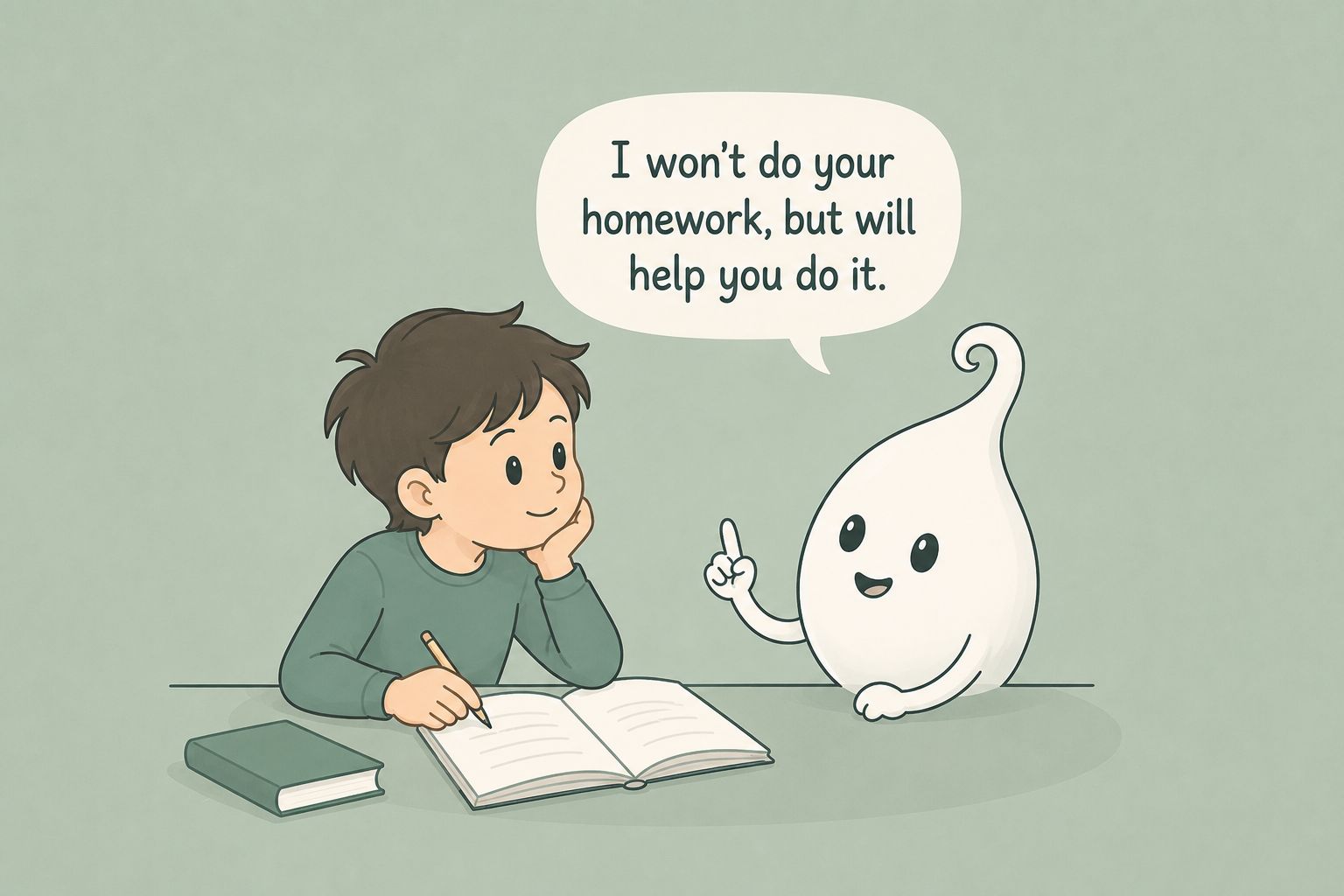
It won't generate passive essays or final answers, so assignments measure real understanding again.
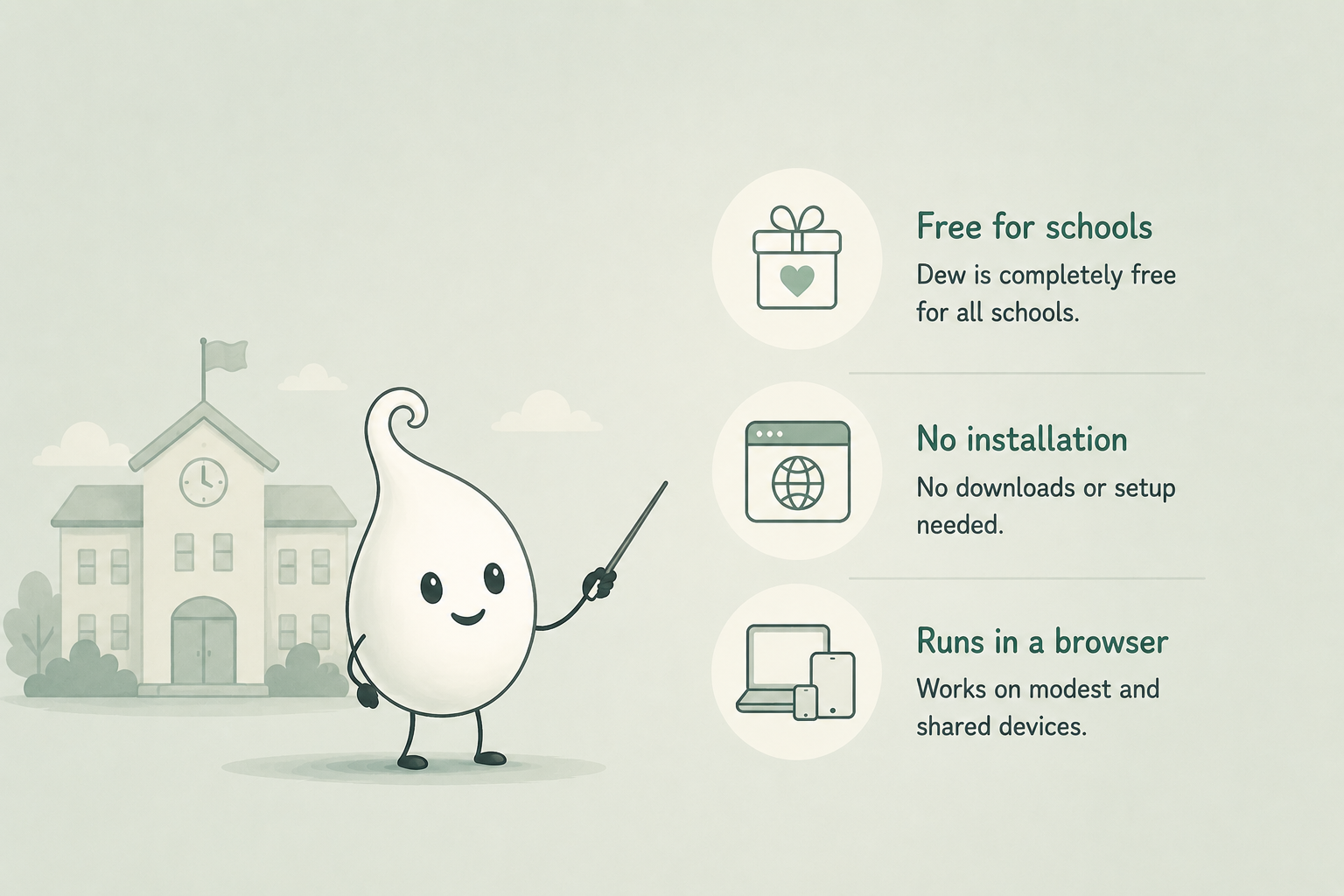
Runs on what you already have
dew runs in the browser as a hosted service, so it works on the modest and shared devices schools already have — no downloads, no hardware upgrades.
Open by design (coming soon)
dew's weights, code, and methods will be released open-source under Apache 2.0, so institutions will be able to inspect exactly how it works and, in time, self-host it. Today it runs as a privacy-protective hosted service, with data stored in India.
The Socratic method.
dew isn't adult AI with parental controls added later — it's developmentally aware by design. At its core is the Socratic method: a cooperative, question-and-answer style of teaching. Instead of providing answers, dew guides children to discover truths on their own — asking probing, open-ended questions that challenge assumptions, reveal contradictions, and build deep, analytical thinking. It knows when to answer, when to ask, when to simplify, when to encourage, and when to direct a child toward a trusted adult.
The kinds of questions it asks
“What exactly do you mean by that?” · “Can you give me an example?”
“How did you arrive at that?” · “What if this were the case?”
“Why do you believe this evidence is reliable?”
“How might someone on the opposing side view this?”
“If your argument holds true, what logically follows?”
The student becomes the active participant — thinking for themselves and building understanding that lasts.
How we built it ?
Fine-tuned on a curated corpus of age-appropriate material — so its vocabulary and pacing fit the child, not a corporate user.
Training pipeline
Initialises from a clean, open 9B base and fine-tunes on a curated corpus of age-appropriate material — so age-appropriate language is the model's natural output, not a filter bolted on afterward.
Instils the Socratic, guide-first behaviour through supervised fine-tuning on curated example dialogues — multi-turn guiding inquiries, contextual hints, and conceptual milestones — so guiding before answering is the model's default.
Wraps the model in independent code-enforced safety - input and output moderation, always-on crisis routing, and deterministic answer-checking (maths is verified symbolically) — all enforced outside the model, so a jailbroken or mistaken model still meets limits it cannot override.
DEW: Responsible AI, Built for Children
This paper describes DEW, an open-weight AI assistant built for children; the evidence and international standards that shape it; and the architectural principles on which it is built. The foundation weights and training methodology will be released as open source on GitHub (coming soon), under the Apache License 2.0.
Read the paper ↗It will be free forever
A child's mind should never be a business model. We will keep DEW free, forever — never gated behind a paywall, never sold. Our code, datasets, and methods will be released open-source under Apache 2.0 (coming soon), so anyone can inspect, host, and improve it.
This is how we deliver on our purpose of Responsible AI: not as a compliance exercise, but as the engineering philosophy that guides every model we build.
What is Dew?+
Is Dew safe for my child?+
How do sign-in and consent work?+
What data do you collect?+
Where is my data stored — and do you use it to train AI or for ads?+
We are open to partner
dew is free and open-source (coming soon). We grow it with partners who bring it to schools, fund it through CSR, or collaborate on research.
Get in touch with the dew team at dew@rainwaterlabs.com